
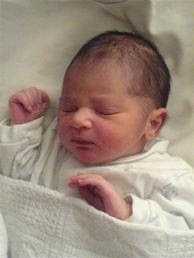
Wed. 8th November 2006
Each year, I take time to reflect and decide which memory of my son I’m ready to share with the world. Some years, the decision is difficult. But this year, it was easy. Today, 8th Nov. 2018, is Ankut – the Hindu New Year. We’re in the midst of Diwali, a time of light, joy, and celebration for many of my family and friends – and for me too.
Today is also my son’s would-have-been 12th birthday. If he were here, I have no doubt this day would’ve been filled with laughter, love, and celebration – smiles lighting up every corner, just like the Diyas of Diwali. So this year, the memory I’ve chosen to share is a joyful one. A memory that I hope leaves you smiling, not crying. 🙂
Wednesday, 8th November 2006 – I’m awake in the very early hours of the morning. It’s still dark outside and the house is silent, offering a moment of calm before the impending storm. At 40 weeks pregnant, I’m feeling heavy and uncomfortable, weighed down further by a head cold. My nose is stuffy and constantly dripping, like an open tap – from the moment I get up to the moment I lie down. I drift in and out of sleep, stirred by a dull, period-like pain that keeps waking me. I’m not surprised by it, yesterday I had a ‘show’, the quiet signal that labour is near. It’s exactly how things began with Rakhi; no dramatic gush of water, no intense pain. Just a simple, quiet sign that early labour has begun.
Rakhi was born at 38 weeks, so I almost expected this baby to arrive then too. At 38 weeks, I truly thought I was going into labour – but then, quite suddenly, it all stopped. (That moment now makes sense in light of the post-mortem results, though that’s a memory for another year, to share when, and if, I ever feel ready.) This little baby seems in no rush, still tucked up, warm and cosy in my tummy, showing no signs of wanting to enter this crazy world. I’ve heard people say, “Girls arrive early and boys late.” We already know this time we’re having a boy, so I’ve embraced that old saying and joke that he’s just being a ‘lazy little boy’. Although I’ve genuinely enjoyed this pregnancy, I won’t pretend I’m not exhausted now. With a lively 15-month-old running circles around me, demanding all my energy and attention, there are moments I even forget I’m pregnant.
The light, yet frequent and noticeable pain is a clear reminder of what the early stages of labour feel like – and I know this is it. It’s happening. He’s on his way. I drift in and out of sleep, until a little later, when the first glimpse of morning light slips through the curtains, teasing like a gentle feather. Though just a sliver, it brightens the room – a quiet reminder that no matter how much I welcome the peace of night, the day always follows. Outside, the birds begin to stir, chirping the arrival of a new day. But today feels different. I lie still in bed, listening – to the change, to my body. The pain is more pronounced now. Today is the day my son will be born, I’m sure of it. Even though I’ve done this before with Rakhi, I can’t help but feel a little apprehensive. Maybe it’s because this time, I know exactly what to expect -and I remember just how painful childbirth really is! 😩 Still, all of that pain seems to vanish the instant your baby is placed in your arms. I deliberately toss and turn in bed, hoping to wake Suresh. The plan works – he stirs and asks if I’m okay 🤣. I tell him, “Baby’s on his way.” To my surprise, he acts super cool, barely moving from bed. But it doesn’t take long for reality to hit – this isn’t a false alarm. It’s the real deal. He calls in to start his two weeks of paternity leave… how exciting!
We potter about the house that morning – getting Rakhi ready, putting on a wash, doing the final bits of hospital bag packing. But I find myself needing to stop more frequently now, slowing down just to catch my breath. I decide to retreat to Rakhi’s bedroom and sit on the gym ball for a while, listening to some calming music. It definitely helps to centre me. As I look around the room, I notice how it’s slowly transformed into a bit of a storage space – baby car seat, buggy, boxes of nappies, the Moses basket – all waiting to be built and put in place after Baby arrives. Not before. I’m a little superstitious like that. Seeing it all laid out before me feels slightly overwhelming, but more than anything, I feel excited. It’s really happening.
This time, just like last time, I’ve planned for a water birth. I feel grateful to have already experienced a spontaneous, natural birth with Rakhi. I’m fully aware that for many women, that’s not even an option – not because they’re afraid to push – but simply because they have no choice. A Caesarean section is sometimes the safest way to bring their baby into the world. In fact, I truly believe a C-section can be an even more challenging birth to endure. The recovery is often longer and more complex, both physically and emotionally. So, I have the deepest respect for all the strong women who’ve gone through it. It’s every bit as valid and powerful a birthing experience – because in the end, the result is the same: a beautiful baby in their mother’s arms.
During my water birth with Rakhi, I panicked when I reached the transition stage. I couldn’t think, couldn’t move – I was in survival mode. The overwhelming rectal pressure and any kind of touch became too much. I suddenly wanted an epidural. 🙈 The thought of having to push without pain relief sent me spiralling. I insisted on being taken to the hospital from the birthing centre. But by the time I got there, it was too late. I was already getting the urge to push. Ironically, the stage I had feared the most – pushing – turned out to be the easiest part of childbirth for me. So this time, I was mentally prepared; I was going to stay in control. I knew what to expect. I understood that when I reached the transition stage – the point in labour that demands complete surrender, it would be the hardest moment for me. That’s the part where I have to zone in completely, focus inward, and trust myself. Trust my mind, my body, and my soul to carry me through. The truth is, how your labour unfolds – and how it feels, isn’t something you can control. Your only job is to follow your body’s lead; to accept and work with the sensations that are bringing your baby to you.
I feel incredibly lucky to be experiencing this today – a blessing for the second time in my life. I know how much of a struggle it can be for so many. And truthfully, it wasn’t an easy journey for us either. Before Rakhi, there was an ectopic pregnancy, which led to the loss of my left fallopian tube and left behind a lovely 6-inch laparotomy scar across my bikini line – a daily reminder of that loss. Then came the diagnosis of PCOS, years of struggling with infertility, and, eventually, a keyhole ovarian drilling procedure. I had reached the point where I had given up all hope of becoming a mother. I was emotionally drained, heartbroken by every friend or family member’s pregnancy announcement while my own womb remained empty. I felt helpless, trapped in a downward spiral. I was on the verge of losing the last ounce of hope I had left in me, when we fell pregnant with Rakhi. The moment that pregnancy test turned positive, it felt like I had surfaced from underwater and could finally breathe again. So when Rakhi was six months old, we thought it was best to try again for baby number two. I was already on a career break, having accepted a healthy redundancy package from my previous employer when I was seven months pregnant with Rakhi, and it made sense not to delay. I remember saying to Suresh, “Knowing our luck, it’ll take us another few years to fall pregnant again.” But, this time without any trouble – I found out I was pregnant, on my birthday!
Aisha, ever the competitive sister, likes to believe she’s my special girl because she came after her brother and brought light back into our lives after Krishan died. But I remind her often how special her big sister, Rakhi, is too – for giving me hope of becoming a mother when I had almost given up entirely. They both love hearing what makes them special to me – in their own unique and beautiful ways.
The contractions are now well underway – it’s late morning. Suresh has called my mum over, my pillar of strength. I don’t think I would be the strong woman I am today if it weren’t for her, standing beside me and showing me how. She arrives in what feels like a flash and begins giving me the most wonderful leg and foot massage. How do mums always know exactly what their child needs and when? Apparently, having your legs massaged during labour is supposed to make it easier. Her hands are so warm and healing. As she massages, my mum tells me something that stays with me: a woman is born three times in her lifetime – first as a daughter, then secondly, when she marries and enters her marital home, and thirdly when she gives birth and becomes a mother. Each time, she is born stronger than before. With every birth comes danger, and surviving it makes a woman even stronger. Do I feel strong? Damn right I do. I am about to experience that power again – the fierce strength of the woman inside me, taking on the force of nature. But is it not true that all women are strong? Regardless of whether they’ve experienced the latter ‘two births’ or not, I believe a woman is reborn again and again – in many forms, through many walks of life. I don’t have the energy to argue this point with my mum right now. Instead, I remind myself that I am strong and that I will get through this experience once again.
My contractions are much closer now – it must be early afternoon, around 1pm. My mother-in-law has also popped over to help keep Rakhi entertained. We decide it’s time to head to Edgware Birthing Centre. Both mums stay behind with Rakhi at home. Rakhi seems completely oblivious to everything happening around her. Suddenly, she feels so grown-up to me. I just want to hold her for a moment and soak in how tiny she still is – before she officially earns the title of ‘big sister.’ There’s a buzz of excitement in the air as we leave home. Both grannies are eagerly awaiting the new arrival. We haven’t shared the baby’s sex with any family or friends yet. We can’t wait to share our joy and euphoria with everyone once he’s here.
At the birthing centre, I’m shown to my room. I step inside and immediately notice it’s prominently pink… how I wish it were blue for my boy! We settle in quickly. I love the ambience of the birthing centre – the atmosphere feels calm and welcoming. The birthing pool has been filled, and I’m soon enveloped in the warmth of the water, totally in my zone. With a full tank of magical gas and air, the lights dimmed, and soft instrumental music playing in the background, it’s the very textbook, holistic birthing experience you might imagine. The midwife, Sue Grant, comes in and out of the room. Despite contractions coming thick and fast, I feel completely in control of my body. Suresh is relaxed, watching a bit of TV in the room – like you do! He keeps popping his head in and out of the pool area. It might sound odd, but I’m totally cool with this. At this late stage of labour, I’m easily irritated by touching, massaging, or fussing over me. He knows this. Just knowing he’s there is enough. During transition, the rational mind is completely subsumed. Some women describe it as an out-of-body experience. Let your partner handle the outside world while you focus inward.
I start to feel the urge to push. I remember from last time that this means I’ve reached the top of the hill – I’ve made it through the transition stage, and my cervix is fully dilated. I’m a little surprised at how quickly the urge has come on. Suresh calls Sue, and I’m glad to share that he immediately switches off the TV and stays right beside me for the rest of the birth 🤣. In fact, he even captured parts of our afternoon at the birthing centre on a camcorder. We have a full 14-minute recording of our son’s birth! I love watching that short, bittersweet video every now and then – though I probably don’t watch it enough. Twelve years on, when I do watch it, everything feels a little surreal, almost like a past life. I guess sharing memories like this with you all brings him back to life for me again, if only for a brief moment.
The whole birthing experience feels so much more controlled this time. I feel empowered, completely in sync with my breathing and my body – a truly powerful feeling. Soon, Sue tells me to pant, as the baby will be out with the very next push. Once again, I’m surprised by the instruction to pant. Everything seems to be unfolding smoothly and without drama – how did I get to this stage so quickly? That dreaded transition phase feels like it has passed me by. Maybe it was a mind-over-matter thing. Maybe being in the water meant I didn’t feel the pain as intensely as last time. As I pant, I prepare myself to scoop my little boy out of the water. I’m shaking. With one final push, he emerges – scrunched up, really calm and quiet – at 15:14. He has his right hand up to his right ear. This is how he was born. Many of his early photos show him with his right hand in this position. Sue calls it his “superman impersonation.” Suresh cuts the cord while I have a quick skin-to-skin cuddle in the water. Soon after, my son is wrapped in a towel and begins his very short journey.
A good few minutes have passed since my son’s birth, and I’m still waiting for the placenta to be expelled. Sue decides it’s best to help me out of the water and onto dry land to encourage the third stage of labour. As many of you will know, this final stage usually happens within moments of birth, but for some reason, it’s taking longer for me. I’m not the slightest bit concerned – my focus is completely on the tiny, perfect human I’ve just brought into the world. I’m in total awe of him. Within minutes, he has already become the epitome of love that moves my whole universe, radiating a love so powerful it moves everything inside me. He looks healthy and peaceful, already searching for his first feed, gently suckling on his hand while Sue prepares his name tags. I haven’t had the chance to feed him yet. Still waiting for the placenta, Sue places him in my arms, hoping breastfeeding might help move things along. Feeding feels so much easier this time – like second nature. I remember instantly how to guide him to latch, and he, in turn, knows exactly what to do. He feeds effortlessly, unlike his sister, who needed a little more coaxing. What a beautiful moment this is – so calm, so natural. Just the two of us, wrapped in the quiet magic of firsts.
Buoyed by the arrival of his son, Suresh calls home to share the joyful news with the two grannies. Both are overjoyed. It’s my mum who answers the call and somehow, as only mums can, she senses that something isn’t quite right. She gently probes Suresh for more details and then asks to speak to me directly. I reassure her that everything is fine, explaining calmly that the placenta is just taking a little longer than expected. I think I sound calm enough to put her mind at ease. Still, she quietly mentions that this can be dangerous, though she quickly drops the conversation, not wanting to worry me further. Suresh also calls his dad at work, who wastes no time in sending out an email to the extended Jesani family to announce the arrival of the newest addition. We didn’t have WhatsApp back then for instant updates – no quick photos or status posts – just emails and good old-fashioned phone calls to spread both good and bad news. Back at home, both grannies spring into action with their own special roles – one babysitting Rakhi, the other rushing home to prepare traditional Indian postnatal health foods for me. These are specially made to help new mothers regain strength after childbirth. It’s a bit like marmite – you either love it or hate it. Lucky for me, I’ve always quite liked it, and I’m secretly looking forward to being on this super-strength, restorative diet over the next few weeks. 😋
On the other hand, I can see midwife Sue’s growing concern. We are now four, maybe even five-plus hours post-delivery, and the placenta still hasn’t come away. Sue has tried everything she can to avoid transferring me to hospital, but nothing is working. “It’s a retained placenta,” she finally says. And although I’m not losing blood, she’s now worried. A retained placenta is, in itself, a serious, potentially life-threatening situation due to the risks of infection and postpartum haemorrhage. And the manual removal of a retained placenta carries its own risks. Sue gently tells me I’ll need to be moved to the local hospital for further care. How inconvenient… when all I want to do is stay curled up in this peaceful pink room with my baby boy, who’s lying contentedly in his little white babygro – covered in baby bunny rabbits sat in blue cars, blue bikes, and blue scooters. I’m in love with the sight of him, and leaving this serene moment behind feels impossibly hard. We call home to update both sets of parents – letting them know that I’m being transferred to Barnet Hospital by ambulance. Suresh will follow behind in the car.
In the ambulance, I’m strapped to a stretcher, cradling my baby boy in my arms. A wave of dizziness suddenly washes over me. The ambulance crew quickly stops, and Sue gently takes hold of my son. From there, we’re blue-lighted to Barnet Hospital. Once we arrive, I’m wheeled into a small triage room divided into two cubicles. The curtain separating us from the other patient is thin-paper-like. I don’t mean to eavesdrop, but I can hear the woman next door speaking with a doctor. She’s also been transferred from the birthing centre after sustaining a third-degree tear. She needs stitches and will be staying in for a few days. Her baby boy was born around the same time as mine, just in the room next to mine. I can’t help but wonder… did she have the blue room? Once Sue finishes handing me over to the hospital staff, she walks over, says her goodbyes, and leaves. I remember feeling calm in the moment, but I later found out that when she left me that day, she was deeply uneasy about the situation. (Another memory I’ve tucked away, one I’ll probably share with you all again – another year, another time.)
So, here I am – bed bound and Daddy is officially on nappy duty! Suresh is tasked with changing his son’s very first nappy, while I supervise from my hospital bed, offering instructions like a backseat driver. He looks a little unsure, clearly nervous, but determined. As much as I love watching this moment, and as proud as I am of him stepping up, a small part of me wishes it was me changing our son’s first nappy. Being the hands-on mother I naturally am, I feel a quiet pang of envy – something about those tiny moments that feel sacred. Soon, the doctor arrives to talk with me, and just as I begin explaining my situation, it hits me – now it’s the lady in the next cubicle’s turn to eavesdrop! I can’t help but smirk at the thought of her quietly listening in on my story, just as I had done with hers earlier. Funny how these things go full circle, even in the most unexpected places.
The young, Asian lady doctor begins to explain to me what a retained placenta actually is. I find myself staring at her – not out of rudeness, but almost in a daze. I am listening, but not entirely focused on her words. Instead, I’m watching her every movement, the way she gestures, her calm professionalism. A strange thought pops into my mind: I wonder if she has any children. Odd, I know, but in that moment, everything felt slightly surreal. She continues explaining that only once the manual removal procedure begins will she know the extent of the issue. Sometimes, she says, with a small nudge, pull and tug, the placenta comes away easily. In other cases, it’s more stubborn – fixed to the uterine wall and needing to be pulled away with force. Then she gently shares the worst-case scenario; if the placenta is deeply embedded, I may need a hysterectomy – and there’s a high risk of haemorrhage, which could mean needing a blood transfusion. You’d think I would be panicking hearing all of this. But oddly, I’m calm – cool as a cucumber. The thought that runs through my mind as I sign the consent forms is this: my family is complete, I don’t plan on having any more children, so if it comes to it… that’s okay.
We’re left alone for a while after that. During this time, both sets of grandparents manage a quick visit. They each get a precious cuddle with our little man and drop off my post-delivery health food stash 😋 – it really is a flying visit though, as they aren’t allowed to stay in the cubicle with us. Today, I’m thankful for the few photos we have of that brief but special moment – him with all four of them, together. Shortly after, the nurse arrives to take me through to theatre. As I’m being wheeled out, I glance back at Suresh holding our son. For the first time since giving birth, I feel uneasy – an unexpected knot in my stomach. I can’t quite place the feeling, but it unsettles me. Maybe it’s just nerves. Maybe it’s that natural apprehension anyone feels being taken into an operating theatre. But there’s something deeper. A quiet, instinctive whisper inside me that says: something’s not quite right.
As they pause at the door, I turn to Suresh and say, “Look after him.” I try to say it lightly, but it lands heavier than I expect. Maybe, on some subconscious level, I’ve begun to sense what’s about to unfold. The conversation with the doctor, which I had only half-registered at the time, is suddenly echoing loudly in my mind – talk of risks, transfusions, even hysterectomy. It all feels much more real now, and I can’t quite shake the feeling that I’m stepping into the unknown. Once in the operating theatre, the anesthetist begins preparing me for an epidural. How ironic – I didn’t need one for the birth, yet here I am, needing it after the birth, just to deliver the placenta. A kind theatre nurse stands by my side and holds my hand the entire time. Her presence is calming, and she gently reassures me that all is well throughout the procedure. I’m aware of how vulnerable I am in that moment – physically spent, emotionally raw, and now handing myself over once again, but this time not to the rhythms of labour, but to medicine and intervention.
Thankfully, I’m one of the luckier ones. The placenta, though partially embedded into the uterine wall, is removed without complications. No haemorrhage. No need for a blood transfusion. No hysterectomy. I breathe a sigh of relief I didn’t even know I was holding. Fast forward to Friday, 20th Nov. 2015, at a Sands (The Stillbirth and Neonatal Death Charity) meeting at the Park Plaza Hotel in Victoria. As I sit in that room, listening to another mother share her story of a retained placenta, I’m suddenly transported back to that theatre table. Her experience was so tragically different – one that nearly cost her her life, one that did result in a hysterectomy and a blood transfusion, and, most heartbreakingly, the loss of her daughter. As I hear her speak, I realise just how close the line can be between life and death, joy and loss. In that moment, I am overwhelmed with gratitude – and sorrow. Gratitude that I made it through. Sorrow for those who didn’t. It’s a reminder that birth is not just about new life, it’s also about survival, resilience, and the quiet strength it takes to carry both joy and pain in the same breath.
I am soon out of the theatre, placed on a strong course of IV antibiotics to guard against any risk of infection, and finally back in the recovery cubicle with my baby. It feels strange, unsettling almost, to not be able to feel my lower limbs or get up to tend to him myself. My body, which only hours earlier had brought him into the world with such power and control, now feels distant and detached. By now it’s late into the night. Suresh is allowed to stay with us until we are given a bed on the postnatal ward. His presence is comforting – a quiet, steady support, while I lie immobile, grateful but physically spent.
Once we’re moved onto the ward, I realise I’ve been placed right next to the same lady from earlier. The curtain between our beds stays drawn the entire time, and though we’re now only feet apart, I never actually see her or her baby’s face. Still, I eavesdrop quietly, piecing together little fragments of her story, just as she must have done with mine. She gave birth the same day as I did. In the same birthing centre. In the room next to mine. Our sons, born almost side by side, beginning their lives in parallel… and yet we remain strangers. Even now, I find myself wondering how she is – how her son is. How her life has unfolded since that day. Perhaps it’s the shared vulnerability of those hours, or the invisible thread that binds women together in these liminal, life-altering moments. We were two mothers, navigating two quietly complex stories behind the veil of a hospital curtain. And though our paths never truly crossed, I carry her memory with me.
Suresh helps me unpack a few essentials from our hospital bag – things I can’t reach or manage on my own and then quietly heads home for the night. The nurse on duty reassures me that if my son cries, she’ll be there to change his nappy and bring him to me for feeds. With that comforting thought, I close my eyes, finally ready to surrender to some much-needed rest while my baby sleeps beside me. Through the night, I drift in and out of sleep. The ward is filled with the soft cries of newborns, and each time I stir, my first instinct is to check that it isn’t mine. But true to her word, the nurse looks after him as if he were her own – tending to him gently, waking me only when it’s time for a feed. Each time she places him in my arms, I am overcome with disbelief… he is finally here. My heart feels full, my soul anchored. In this quiet solitude, I feel content, fulfilled. After what felt like an endless journey of longing, loss, and hope, I can now rest in the comfort of knowing my family is complete. This moment – just him and me in the stillness of the night – feels sacred. It hasn’t been an easy road to reach this place, but we are here. And as I watch him feed, his tiny fingers curled gently against me, I feel nothing but gratitude. We made it. And now, I get to be a mother to both my children.
____________________________
Happy Birthday, my sweet little boy…
Thank you once again for allowing me to share another one of Krishan’s memories with you all, and for taking the time to read another little part of my heart.
Maybe today is the day for me to revisit what I once called my Richest Moment. Perhaps I’ll reach for that pale yellow sari tucked away at the very back of my wardrobe – the one I wore for Diwali in October 2006. I haven’t had the strength to wear it again, nor the heart to let it go. But maybe, just maybe, I will wear it today – for his birthday, and in honour of Diwali – and visit the temple with him close in my heart.
To all my family and friends who are celebrating: Wishing you a very Happy Diwali and a Prosperous New Year. May light, love, and togetherness always guide your way.
B
xx